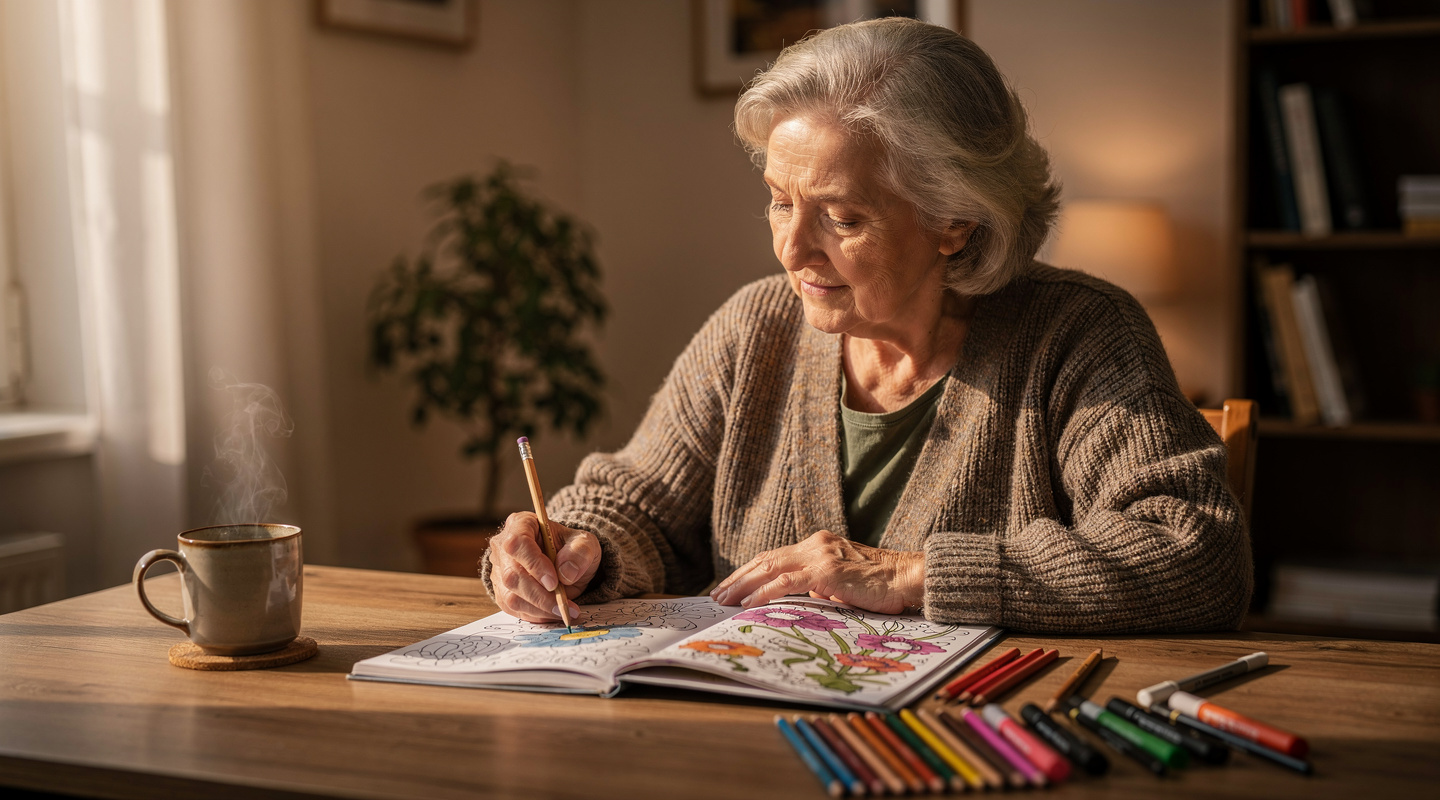
Why Coloring Is a Powerful Stress Reliever — The Science Behind It
Some days, the tension just won’t let go. The kind that sits in your shoulders, makes small things feel irritating, and follows you to bed. You’ve probably found your own ways to cope — a walk, a cup of tea, some television. These help. But there’s another option that many adults overlook because it seems too simple, too childlike: coloring.
It turns out, there’s solid neuroscience behind why picking up colored pencils can genuinely ease stress. This isn’t wellness marketing — it’s what happens in your brain when you engage with this kind of activity.

Yuki

Shio
What’s Actually Happening in Your Brain When You’re Stressed
When you experience stress — whether from a difficult conversation, an unexpected problem, or just accumulated daily pressure — a region of the brain called the amygdala activates. The amygdala is essentially the brain’s threat-detection center. It signals danger, triggers emotional reactions like fear and anger, and floods your body with cortisol, the stress hormone.
Your heart rate rises. Your muscles tighten. Your thoughts speed up and loop. This is the stress response — a survival mechanism that evolved to handle physical threats, now being activated by emails and social friction. And once it kicks in, it can be surprisingly hard to turn off without intentional intervention.
Repetitive Motion Releases Serotonin
Here’s where coloring comes in. The act of coloring involves a simple, rhythmic, repetitive movement: choose a color, apply it, choose another, apply it. This pattern — calm, intentional, repeated — is precisely the type of activity that promotes serotonin release in the brain.
Serotonin is often called the “feel-good neurotransmitter.” It’s associated with feelings of wellbeing, emotional stability, and relaxation. Low serotonin is linked to anxiety and depression; higher serotonin is associated with calm and contentment. Walking and swimming are well-known serotonin boosters — but both require leaving the house. Coloring delivers similar neurochemical effects from your kitchen table.
Focused Attention Quiets the Amygdala
When you’re genuinely absorbed in coloring — choosing shades, managing the pencil, watching the image come to life — your prefrontal cortex (the brain’s rational, planning center) is active and engaged. This activity has a dampening effect on the amygdala. In simple terms: when your thinking brain is busy with something constructive, your alarm brain calms down.
Many colorists describe the experience as “the only time I stop worrying.” That’s not coincidence or placebo — it’s a neurological shift. The stress response that was running in the background loses its grip while you’re focused on something else. And interestingly, the calm often lingers even after you’ve put down the pencils.
The Unexpected Power of Choosing Your Own Colors
Modern life involves a lot of constraint. Schedules, expectations, obligations. The coloring page is one of the few spaces where your choices are genuinely free — where no one has an opinion about whether the sky should be blue or lavender, whether the leaves should be realistic or gold.
This small but real autonomy triggers a release of dopamine — the brain’s reward signal. Making choices you feel good about, completing creative mini-decisions, seeing the result of your own preferences take shape on the page: each of these is a micro-dose of satisfaction. Cumulatively, they shift your emotional state in a measurable direction.
Yuki
Shio
Finishing the Page Adds Dopamine on Top
When you complete a coloring page, the brain registers a goal achieved. This produces another dopamine hit — the kind associated with accomplishment and forward momentum. Even small completions matter. A single finished page isn’t nothing; it’s evidence that you made something, saw it through, and it turned out beautifully.
Three Principles for Stress-Relief Coloring
- Don’t try to color well: The moment coloring becomes about quality, it generates its own pressure. The goal is release, not perfection. Messy edges are fine. Unexpected color choices are fine. Let the page absorb whatever you bring to it
- Follow your color instincts: Don’t overthink which color to pick. Whatever you reach for first is probably right. Your choices in the moment reflect something real about where you are emotionally — trust them
- Don’t set a time limit: “I have to color for an hour” becomes another obligation. Color until you feel like stopping. Five minutes, twenty minutes, an hour — all of these are valid. The point is not the duration; it’s the quality of presence you bring
What Kind of Images Work Best for Stress Relief?
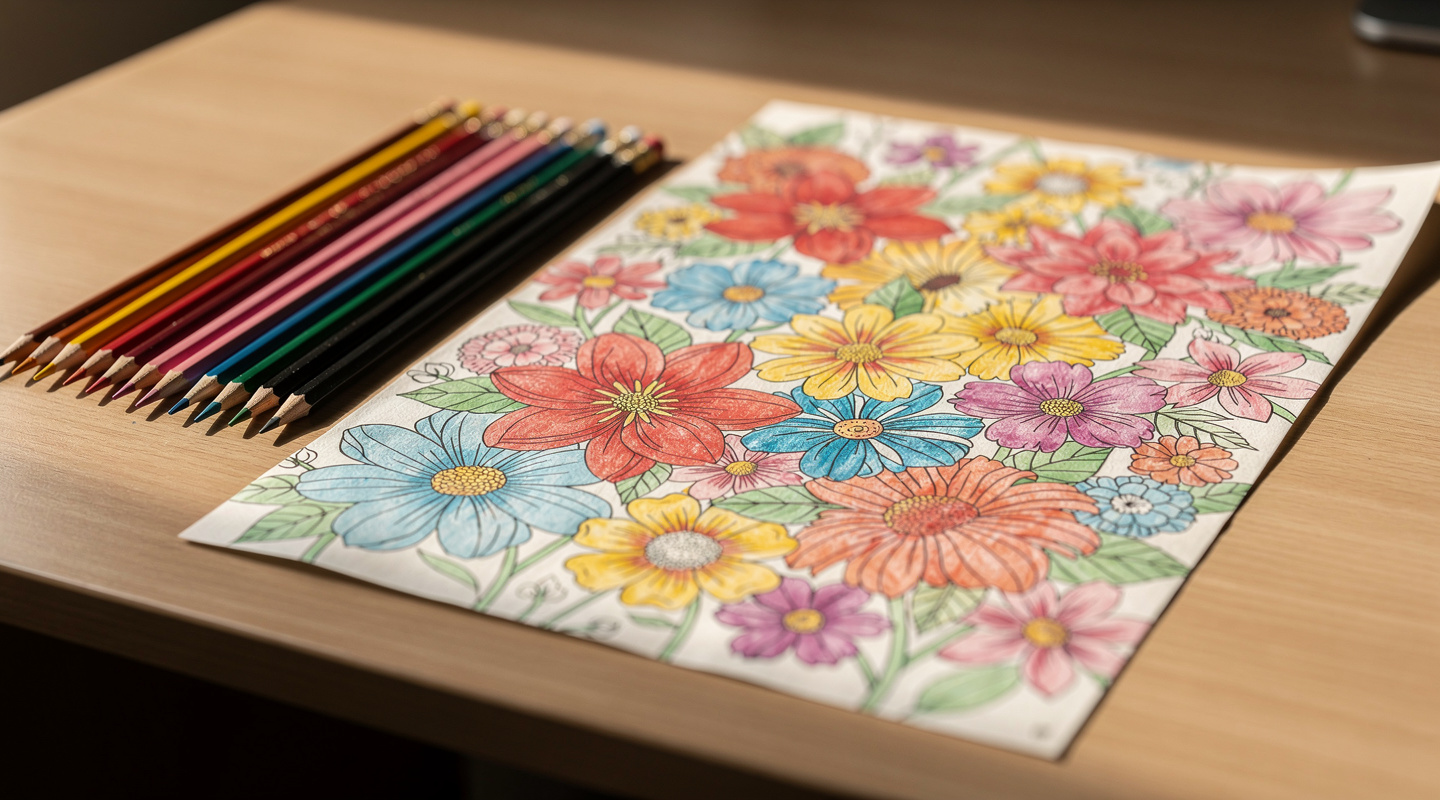
Simpler images work better when you’re genuinely stressed. Highly intricate designs can become their own source of frustration — the opposite of what you need. Look for pages where the shapes are generous, the lines are clear, and there’s room to move freely.
Nature motifs are particularly well-suited: flowers, leaves, ocean waves, clouds. There’s evidence that green and blue tones have a visually calming effect, which adds a layer of benefit when those are the colors you’re applying. But ultimately, the best image is the one that makes you want to start — that’s always the right answer.

Yuki
Shio
IROTSUNA: The Right Page for Today’s Mood
The most stress-relieving coloring session starts with a page you actually want to color. When you’re not in the mood for what’s in your book, the resistance itself becomes a small stressor.
IROTSUNA generates custom coloring pages from any description, in about 30 seconds. Feeling like something calm and natural? Type “a quiet lake surrounded by pine trees.” Need something warmer? Try “sunflowers in afternoon light.” The right page for how you feel right now is only a few words away. Download free on the App Store.