
Sharpen Your Focus with Coloring — 15 Minutes of Brain Exercise a Day
Sharpen Your Focus with Coloring — The Case for 15 Minutes of “Brain Exercise” a Day
Have you ever found yourself reading a book only to realize your mind has wandered? Or sitting in front of the TV, feeling a bit foggy without really knowing why?
Many people feel that their ability to concentrate simply isn’t what it used to be as they get older. But this isn’t necessarily a sign of decline — it may simply mean your brain isn’t getting quite enough stimulation. The good news is, you don’t need to take up difficult studies or strenuous exercise to change that.
Something as simple and enjoyable as coloring can wake the brain right up. The same coloring pages you loved as a child are now being rediscovered by adults as a surprisingly effective “brain workout.”

Yuki

Shio
Feeling a Bit Foggy? Your Brain Might Just Need Something to Do
After retirement, or once children have grown and left the house, many people notice they’re using their minds less intensely than before. During working years, deadlines and responsibilities kept the brain constantly engaged. Now, those daily demands — and the mental stimulation they brought — have naturally faded.
The brain, much like a muscle, tends to slow down when it isn’t used regularly. The flip side of that, of course, is that consistent, appropriate stimulation can keep it active and alert. You don’t need anything dramatic. What matters is creating a small window of focused attention each day.
If you’ve been looking for a hobby that exercises the mind — but want something accessible, calming, and genuinely enjoyable — coloring is worth a closer look. No special skills required. Just pick up a colored pencil and fill in the lines.
Why Coloring Is Actually a Form of Concentration Practice
Think about what happens when you sit down with a coloring page. To stay within the printed lines, you naturally focus your eyes on the edge of each shape, slow your hand movements, and tune out distractions. Without even trying, your attention narrows to the task right in front of you. That, in itself, is concentration practice.
Concentration is the ability to keep your awareness pointed at a single thing over time. Coloring invites this naturally — “What color should I use here?” “Should I blend these two tones together?” — the quiet stream of small decisions keeps the mind engaged and present.
Choosing colors also calls on creativity and judgment. Warm tones or cool ones? Should the leaves be bright green or a deeper shade? These small choices activate multiple areas of the brain simultaneously. No artistic talent needed — the act of choosing and applying color is the exercise itself.
Can 15 Minutes Really Make a Difference? What Consistency Brings
You might wonder: can fifteen minutes a day actually do anything meaningful? It’s a fair and important question.
The key is consistency. Fifteen minutes a day adds up to nearly two hours a week, and about seven hours over the course of a month. Turning something into a daily habit means giving your brain repeated, regular stimulation — and that regularity is what matters most. Like a morning cup of tea, a short daily coloring session can become an anchor that your mind comes to expect and benefit from.
People who have made coloring a daily routine often describe feeling that reading has become easier, that they’re better able to stay with a task, or that fine motor work feels less effortful. These aren’t medical claims — individual experiences vary — but as a low-barrier way to build a daily habit of focused attention, coloring is hard to beat.
There’s another benefit worth mentioning: those fifteen minutes become your own quiet time. Phone set aside, television off, and nothing to do but be with the page in front of you. That stillness itself can feel restorative for both mind and spirit.

Yuki
Shio
Small Tips for Getting More Out of Each Session
A few simple habits can make your coloring sessions even more rewarding. None of these take much effort — just a little intention.
Set Up Your Space Before You Begin
Take a moment to clear the table and arrange your pencils nearby before you start. Sitting by a bright window works beautifully. This small ritual of preparation signals to your mind that focused time is about to begin — and over time, just sitting down in that spot can put you in the right headspace almost automatically.
Decide on a Time Limit
Setting a timer for fifteen or twenty minutes can actually help you focus more. Knowing when you’ll stop frees you from wondering “should I keep going?” and lets you be fully present in the time you have. Many people find it easier to commit fully once there’s a clear endpoint in sight.
Work Slowly, One Color at a Time
Resist any urge to rush through a page. When you work slowly and deliberately — feeling the pencil move across the paper, watching the color build — your concentration deepens naturally. The goal isn’t a finished page; it’s the quality of attention you bring to each line.
Spread One Page Over Several Days
There’s no rule that says a coloring page must be finished in one sitting. Working on the flowers today, the leaves tomorrow, and the background the day after creates a sense of continuity and anticipation — “I wonder how it will look when it’s done” — and that curiosity is often what turns a single session into a lasting daily habit.
Which Types of Coloring Pages Tend to Engage the Brain Most?
Different styles of coloring pages offer different kinds of mental stimulation. Getting to know the varieties can help you choose what suits your mood each day.
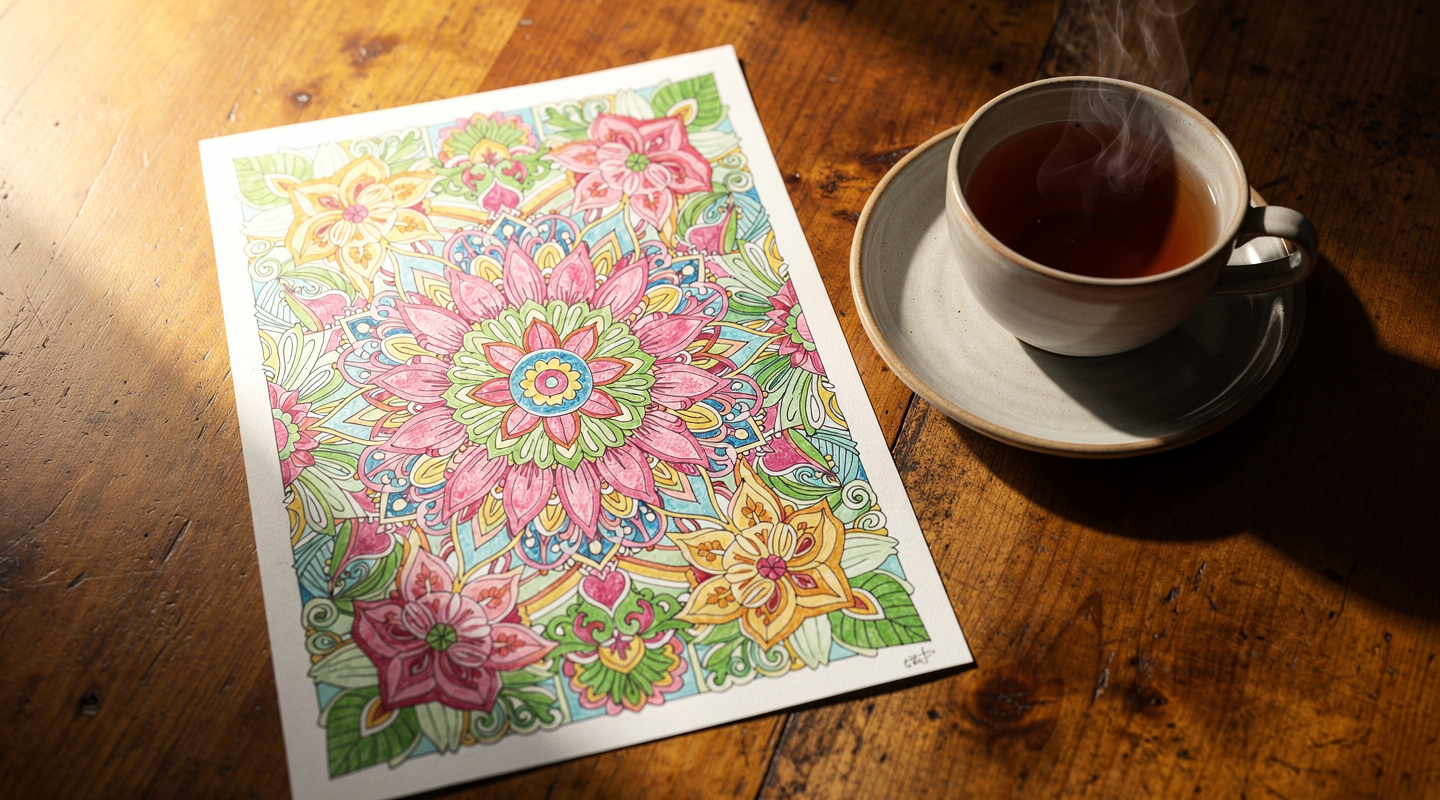
- Geometric patterns and mandalas: These are especially good for visual focus. The precision required to stay within small, repeating shapes sharpens hand-eye coordination and rewards patience. The sense of achievement when one is completed is particularly satisfying.
- Flowers, plants, and nature scenes: Natural subjects invite creative thinking: “What shade of green is this leaf in morning light?” Imagination plays a bigger role here, gently exercising both the visual and creative parts of the brain.
- Animals, people, and landscapes: Images with a sense of story engage emotion as well as thought. Deciding what expression a cat’s face should have, or what mood a landscape should convey, draws on a wider range of mental faculties.
No single type is better than another. Starting with simpler designs and gradually working toward more detailed ones is a natural and enjoyable way to develop the habit over time.

Yuki
Shio
Try IROTSUNA — Your Daily Brain Exercise Companion
If you’d like to try coloring but aren’t sure where to find good line drawings, the IROTSUNA app is a wonderful place to start.
IROTSUNA uses artificial intelligence to generate original coloring pages on demand. Simply type in a theme — “cherry blossoms,” “a mountain landscape,” “a cat sleeping in a sunbeam” — and the app creates a one-of-a-kind line drawing just for you. Because each image is newly generated, you’ll never feel like you’re repeating yourself.
IROTSUNA also includes a community feature that lets you share your finished artwork with fellow coloring enthusiasts. Likes and comments from other members can be a surprisingly warm source of encouragement — and knowing that someone else might see your work often inspires you to take a little extra care with each page. That gentle motivation is itself a powerful driver of concentration.
Each day’s session begins the moment you think, “What should I color today?” Why not let that question become part of your morning? Download free on the App Store.