Colored Pencils for Seniors: A Beginner’s Guide to Choosing the Right Supplies
Have you ever walked into a stationery store, looked at all the colored pencils on the shelf, and walked out feeling more confused than when you came in? With so many options — different brands, price points, and types — it can be hard to know where to start. Or maybe you’ve wondered: “What’s the difference between regular colored pencils and watercolor ones?” or “Do I really need 48 colors to enjoy coloring?”
This guide is here to help. Whether you’re picking up colored pencils for the first time in decades or looking to upgrade your current set, we’ll walk you through everything you need to know — clearly and without the overwhelm.

Yuki

Shio
The First Thing to Know Before Buying Colored Pencils
Colored pencils generally come in two main types: oil-based and watercolor (water-soluble). While they look nearly identical from the outside, their feel and results are quite different. Understanding this distinction before you shop will save you a lot of time standing in the aisle.
Oil-based colored pencils have a waxy or oily core that glides smoothly across paper. They blend well, are easy to control, and require no drying time — making them ideal for beginners. Watercolor pencils, on the other hand, can be activated with water to create soft, painterly effects. They offer beautiful results, but require a brush, water, and some drying time, which adds a bit more complexity.
If you’re just getting started, oil-based pencils are the safer choice. Once you feel comfortable with them, watercolor pencils make a wonderful next step to explore.
Oil-Based or Watercolor — Which One Suits You?
People who’ve tried both often say oil-based pencils feel more stable and less tiring to use, while watercolor pencils produce a finished look that’s especially satisfying to display. Neither is objectively “better” — it all depends on how and where you like to color.
If you enjoy coloring a little each day, or want to take your supplies on the go, oil-based pencils are practical and low-maintenance. If you dream of framing your finished work or making greeting cards, the soft washes of watercolor pencils may be worth the extra effort.
Here’s a handy tip: watercolor pencils work perfectly well without water too. You can start using them as regular colored pencils and experiment with water later, when you feel ready. That versatility makes them a smart long-term investment if you’re open to trying both styles.
How Many Colors Do You Actually Need?
Colored pencil sets come in 12, 24, 36, 48, and even 72 colors. More colors means more creative possibilities — but it also means more decision-making each time you sit down to color.
For most beginners, a 24- or 36-color set strikes the right balance. You’ll have all the basic hues you need, with enough variety to mix and layer without feeling overwhelmed. A 12-color set can feel limiting fairly quickly, while sets of 48 or more take up significant space and may leave you spending more time choosing a color than actually coloring.
Also pay attention to the core diameter. A standard 3.8mm core is easy to handle and offers good control for both large areas and finer details. Pencils with cores that are too thick can make it tricky to stay within the lines or add subtle shading.
Yuki
Shio
3 Things Worth Testing Before You Buy
If possible, try before you buy — many stationery stores have testers. Here are the three things to check:
- Smoothness: Does the pencil glide easily without pressing hard? A smooth core means less hand fatigue during longer sessions.
- Color vibrancy: Does the color show up clearly on paper without looking washed out or too heavy? Test a few strokes to see how the pigment behaves.
- Comfort in hand: Consider the barrel thickness and whether it’s made of wood or a synthetic material. Since you’ll be holding it for extended periods, comfort matters more than you might think.
Japanese brands like Mitsubishi Pencil (Uni) and Tombow are widely available, consistently reliable, and reasonably priced — great starting points. European brands like Faber-Castell and Staedtler are also beloved, though they tend to cost more. A practical approach: start with a quality Japanese 24-color set, and once you know what you like, consider upgrading to a premium brand for your next purchase.
Remember: expensive pencils won’t make you a better colorist. Finding a set that feels right in your hand will.
Don’t Overlook the Paper — A Good Sketchbook Makes a Difference
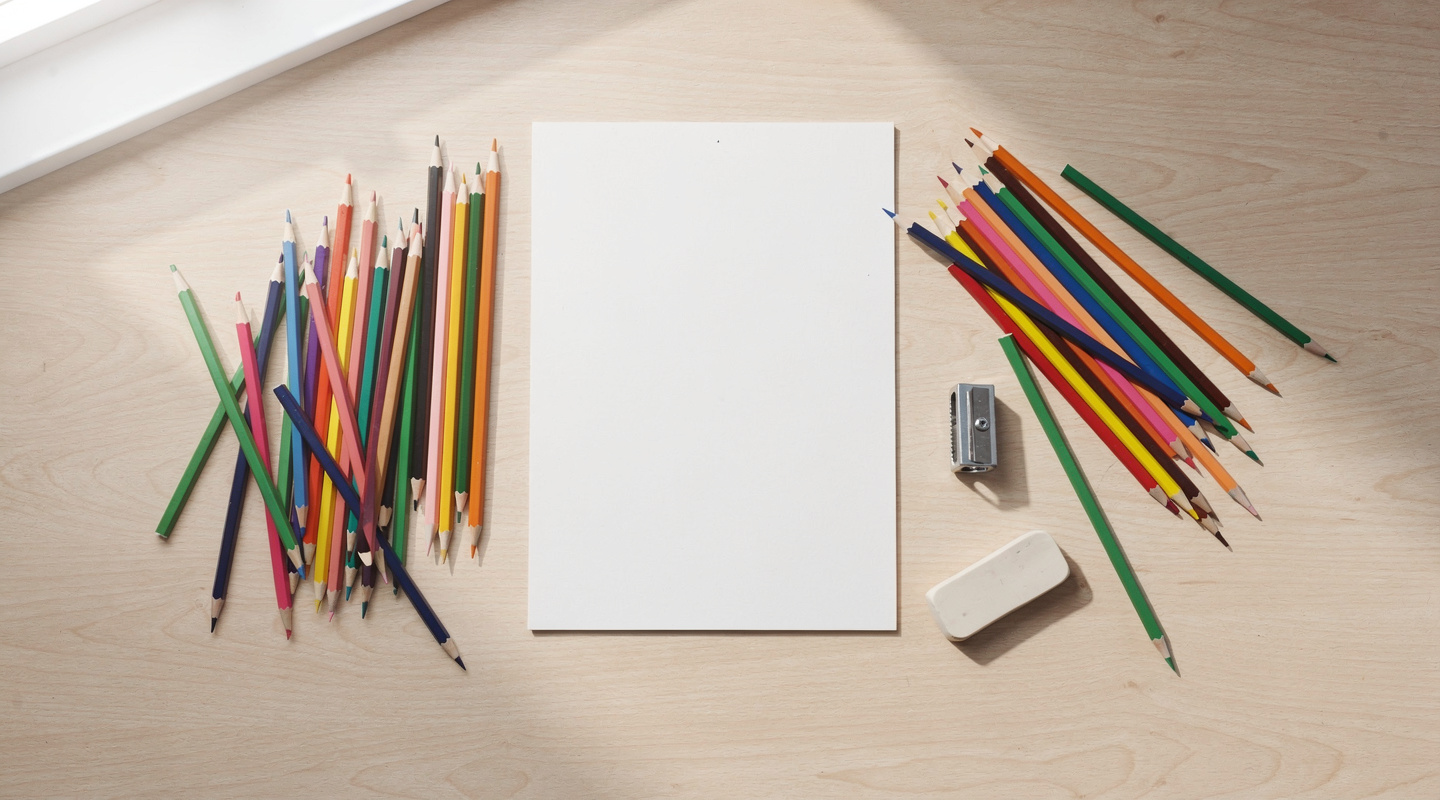
Paper quality matters just as much as pencil quality. Printer paper technically works, but its surface is too smooth — colors don’t adhere well, and repeated layering can cause the paper to pill or tear.
For colored pencils, look for “fine paper” (上質紙) or drawing paper with a slight texture. That gentle tooth grips the pigment and allows for smooth layering. A B5 or A4 sketchbook is comfortable to spread open on a table and easy to handle.
Pre-printed coloring books are another popular option — you can find beautiful designs featuring flowers, landscapes, traditional Japanese patterns, and more. If you’d like to try different designs without buying multiple books, smartphone apps now let you print or display coloring pages instantly. More and more people in their 60s and 70s are discovering the convenience of app-based coloring alongside their physical pencils.
Finding the Right Line Art to Color
Once you have your pencils and paper, the next step is choosing what to color. For beginners, simple designs with clear, thick outlines and generous open spaces are the easiest place to start. Intricate patterns with tiny details can feel frustrating early on and may discourage you from continuing.
Start with flowers, leaves, or simple animal silhouettes — subjects with large areas of open space give you a satisfying sense of completion and make it easier to experiment with color. As your confidence grows, you can move on to more detailed subjects like Persian-style geometric patterns or traditional Japanese motifs that reward slow, meditative coloring.
If you’re unsure where to find designs, free coloring pages are widely available online, and apps that generate line art using AI have made it incredibly easy to create personalized designs from a single keyword or theme you choose.
Small Habits That Help You Keep Coloring
Even with the best supplies, many people find that coloring sessions fade away after a few weeks. The key to sticking with it is making it easy to start.
Keep your pencils somewhere visible and accessible — a lidded pencil case or a small tray on your desk works well. Organize them by color family so you’re not hunting for the right shade each time. When your supplies are already out and waiting, it’s much easier to pick up a pencil and color for even just ten minutes.
Good lighting also helps. Natural light from a window is ideal, but a daylight-temperature bulb (cool white rather than warm yellow) works well too. Accurate color perception reduces eye strain and makes the whole experience more enjoyable. Adjust your chair height and back support so you can sit comfortably for extended periods.

Yuki
Shio
Finally, sharing your work — even casually — can be a wonderful motivator. Seeing other people’s finished pieces, getting an encouraging comment, or simply knowing others are coloring alongside you makes the hobby feel less solitary and more joyful.
IROTSUNA is an app designed with seniors in mind — a warm, welcoming space where you can color, share your creations, and connect with others who share the same love of coloring. With AI-powered line art generation, you can create a personalized design in seconds, color it at your own pace, and post it for the community to see. Download free on the App Store.